Trends and outlook
Science fairs are quietly becoming the UAE’s best research classroom
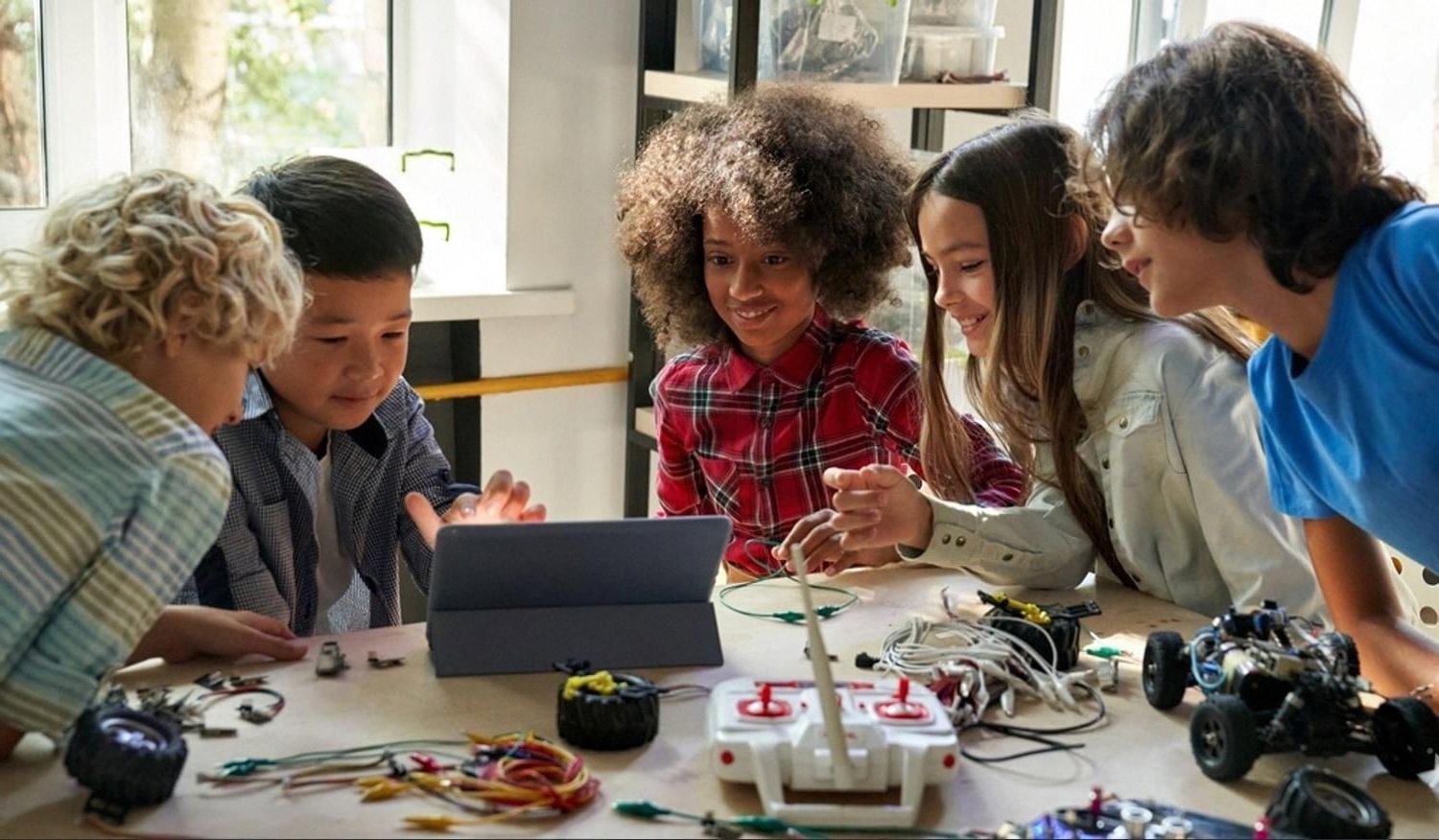
Walk through a school hall in Dubai, Sharjah or Ajman during exhibition week and you will notice something. The projects are no longer just baking-soda volcanoes on trifold cardboard. Students are pitching water-saving prototypes, air-quality sensors, and small robots with clear research questions behind them.
That shift matters, because a science exhibition is one of the few school activities that forces a student to actually do research: pick a problem, read about it, design something, test it, and then defend the result in front of strangers.
Trend 1: Students are choosing their own research question
The single biggest change in UAE school exhibitions over the last few years is that teachers hand over the topic choice to the student. This sounds small. It is not. To take part in a science exhibition a child now has to decide what they actually want to investigate, and that decision is where research skills start.
Instead of copying a demonstration from a textbook, students in many ajman schools and across the wider Emirates are asked to walk around their own neighbourhood, notice a problem, and turn it into a question they can test. That might be salt building up on a car after a coastal drive, why indoor plants wilt when the AC runs full blast, or how much water a garden hose really uses in ten minutes.
- Curiosity as a starting pointnot a topic assigned from a list.
- Local contexttied to UAE climate, water, energy, or food.
- A testable questionnot a general theme like “space”.
- Ownershipbecause the child picked it, they defend it harder.
Trend 2
Deep-dive research before anyone touches a glue gun
The old habit was to build first and write the poster the night before. That is changing. Schools now expect students to spend real time reading about their chosen field before any construction starts, so the model they build reflects what is already known.
- Reading age-appropriate science articles and encyclopaedia entries
- Looking up how similar experiments have been designed elsewhere
- Listing what materials will be needed and where to get them locally
- Sketching the setup on paper before spending a dirham on parts
“The exhibition isn’t the end of the work, it is the moment the work is finally tested by other minds.”
Trend 3: Prototypes that actually work, not just posters that describe them
Judges in the UAE increasingly reward projects where the model does something. A working prototype forces a level of research that a poster never demands. If the circuit does not light up, if the filter does not clean the water, if the miniature wind turbine does not spin, the student has to go back and figure out why.
This build-test-fail-rebuild loop is real science in miniature. The scientific method stops being a diagram in a textbook and starts feeling like the way you get your project to actually behave the way you predicted. Students learn to keep a log, to change one variable at a time, and to stop pretending a failed test never happened.
- Design the model on paperincluding what problem it solves.
- List every material and check what you already have at home or school.
- Build a rough version and test it early, before it looks pretty.
- Change one thing at a time when it fails, and record what happened.
- Finalise the presentation only once the science works.
Trend 4: Exhibition day is a research event, not a show-and-tell
The final trend is about the day itself. Walking around a school exhibition, students see dozens of projects made by other children. Some are better than theirs. Some solve a problem in a way they never thought of. That exposure is a genuine research skill in itself: the ability to read another person’s work, understand the method, and figure out what you could borrow or improve.
Good exhibitions now build this in on purpose. Students are given time to circulate, ask questions of other teams, and take notes. Many go home wanting to rebuild a version of what they saw. That is exactly how working scientists behave at a real conference, and it is a habit worth forming at ten years old.
Observation
Studying other teams’ models trains the eye to spot design choices, materials, and clever shortcuts.
Questioning
Asking the presenter “why did you choose that?” is a research skill most adults never practise.
Replication
Trying to rebuild an interesting exhibit at home turns admiration into a real experiment.
The students who leave the hall with new questions have already won, whatever the judges decide.
What this means for the next few years
The UAE has made a clear national push toward science, technology, and applied research, and school exhibitions are one of the earliest places children feel that pull. Expect school events to keep moving in the same direction: more student-chosen questions, more working prototypes, more cross-school judging, and tighter links with universities and industry partners.
For parents, the practical takeaway is simple. When your child brings home the exhibition brief, resist the urge to buy a kit and finish it in a weekend. The research skills, curiosity, planning, patient failure, honest presentation, only form when the child does the messy middle themselves.
Frequently asked questions
What research skills does a science exhibition actually teach?
Students learn to frame a testable question, read background material at their own level, plan a method, run experiments, record results honestly, and present findings to people who ask hard questions. Those are the same skills used in university dissertations and industry R&D, just at a smaller scale.
How should a UAE student pick a science exhibition topic?
Start with something the student has actually noticed in daily life, water use at home, dust on solar panels on the roof, how quickly ice melts in a car, plant growth under indoor light. Local relevance keeps motivation high and makes the research easier to defend.
Avoid huge themes like “space” or “the environment”. A narrow, testable question is always stronger than a broad topic.
How much should parents help with the project?
Parents should help with safety, sourcing materials, and transport. The thinking, planning, and building should stay with the child. If a judge asks a question and only the parent knows the answer, the exhibition has failed as a learning exercise.
What if the prototype does not work on exhibition day?
A failed prototype with a clear explanation of why it failed is more impressive than a working model the student cannot explain. Keep a lab log throughout the build. On the day, walk the judge through the attempts, the changes, and what the student would try next.
How long before the exhibition should a student start?
Six to eight weeks is a comfortable window. That gives roughly two weeks for reading and choosing the question, three weeks for building and testing, and one to two weeks for the presentation, poster and rehearsal. Anything shorter tends to produce a rushed poster with weak science behind it.
Do science exhibitions really help with future studies?
Yes. Universities increasingly value students who can show a portfolio of independent work, and exhibition projects are one of the earliest examples a young person can put on that list. The habits of planning, iterating, and defending an idea carry directly into secondary school coursework and beyond.

Hiking addict, shiba-inu lover, ukulelist, Mad Men fan and fullstack designer. Acting at the junction of modernism and sustainability to express ideas through design. I prefer clear logic to decoration.